 Kerbio
Property auctions by area
National and online auctioneers
Acuitus
Allsop
Auction Estates
Auction House UK Ltd
- How often
- over 200 auctions every year
- Completion
- 14-28 days
Barnett Ross
BidX1
First for Auctions
- How often
- auctions every month
- Completion
- 4-6 weeks
iam-sold
John Pye Auctions
Landwood Property Auctions
Property Solvers Online Auctions (UK)
Savills
Eddisons
How buying at auction works
Title, searches and special conditions, free from the auctioneer. Have a solicitor read it before you bid.
Traditional auctions give you about 28 days to complete. Most mortgages can't move that fast, so buyers use cash or a bridge.
In the room, by phone or online. Proof of ID and funds is checked before the sale.
At a traditional auction the winning bid is a binding contract. You pay a 10% deposit and the buyer's fee on the day.
Usually within 28 days. Miss it and you can lose the deposit and face costs.
Traditional auction or modern method?
- Contracts exchange when the hammer falls
- 10% deposit on the day, completion usually in 28 days
- A buyer's fee, often £1,000 to £2,000 including VAT
- Common with specialist auction houses
- You pay a non-refundable reservation fee on top of the price, often a percentage of it with a minimum of several thousand pounds
- Then 28 days to exchange and 56 to complete
- Used by many estate agents through platforms such as iamsold
- Count the reservation fee as part of what you pay
Questions
How do property auctions work?
Lots are listed with a guide price and a legal pack. At a traditional auction the highest bid over the reserve wins, contracts exchange on the fall of the hammer, and you pay a 10% deposit plus the buyer's fee on the day, then complete in about 28 days. At a modern method auction you pay a reservation fee and have longer to exchange and complete.
Can you buy an auction property with a mortgage?
Sometimes, but it is risky on a traditional auction: 28 days is tight for a mortgage, and the lender's valuation may come in below your bid. Many buyers use cash or a bridging loan, then refinance onto a mortgage. With the modern method the longer timescale makes a mortgage more realistic.
What fees do you pay at a property auction?
A buyer's administration fee (often £1,000 to £2,000 including VAT), your own legal fees, searches and any costs set out in the special conditions of sale, plus stamp duty. On modern method auctions there is also a non-refundable reservation fee, often several thousand pounds.
What is a guide price?
An indication of where bidding might start or the level the seller expects. The reserve, the lowest price the seller will accept, is confidential and is usually no more than 10% above a single-figure guide.
Why do properties go to auction?
Speed and certainty for the seller: probate sales, repossessions, properties that need work or can't be mortgaged, unusual properties, and sellers who want a fixed date.
About this directory
Built by Kerbio, a small independent UK tool for property investors, from a public list of UK auction houses and each auctioneer's own website. Nobody pays to be listed or for their position. Dates and fees change, so always check the auctioneer's page and the legal pack.
Kerbio's Chrome extension shows sold prices, time on market and Article 4 on property listings, including auction lots on Rightmove.
See the extension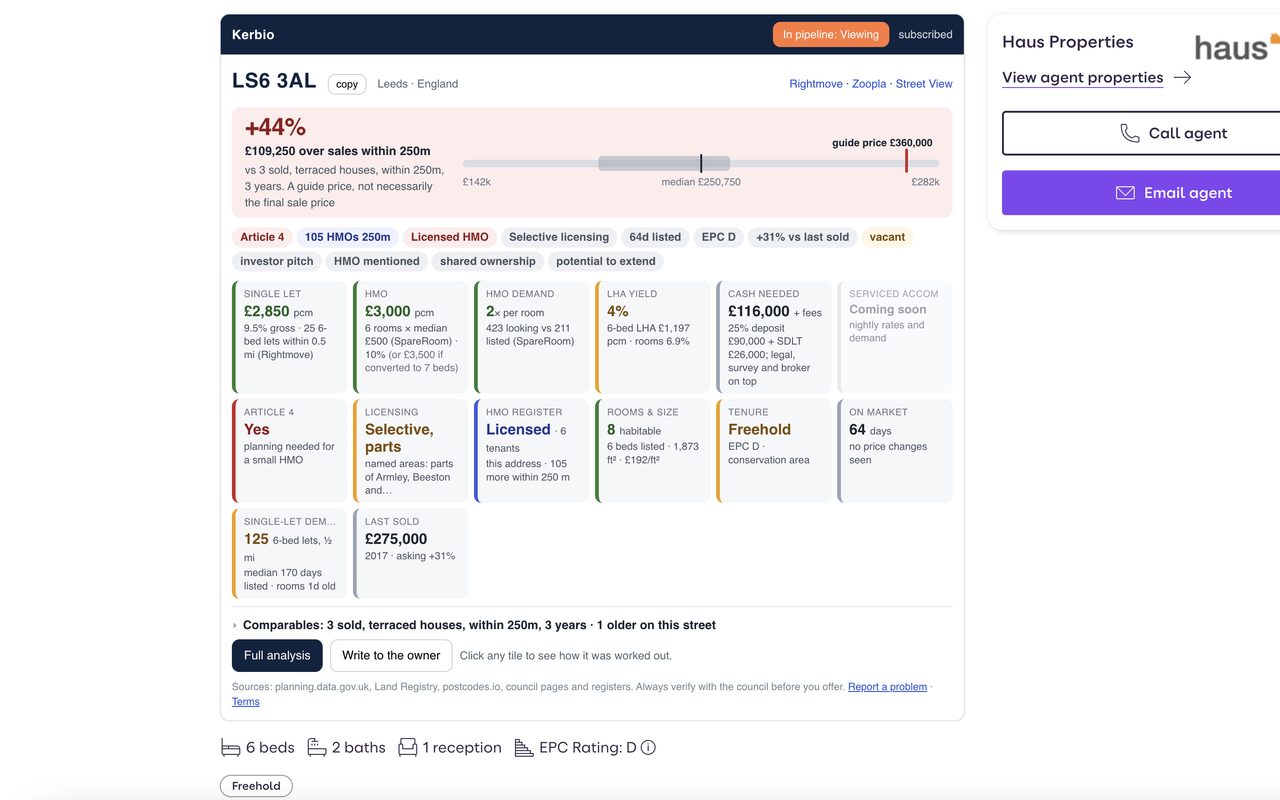
Auction houses from the public auction house directory at propertyauctionaction.co.uk, checked against each auctioneer's own website on 2026-09-30. General information, not advice.