 Kerbio
How the two compare
Profit is added to your income. Mortgage interest isn't deducted; you get a 20% credit instead (22% from April 2027). That is Section 24.
Interest is deducted in full and profit pays corporation tax, 19% up to £50,000. Taking it out as dividends is taxed again.
Profit you reinvest is only taxed once. That's why companies suit people building a portfolio.
Questions
How is rental income taxed in my own name?
Your rental profit is added to your other income and taxed at your income tax rates. Since Section 24, mortgage interest is not deducted as a cost; instead you get a tax credit of 20% of the interest (22% from April 2027). Higher-rate taxpayers therefore pay tax on profit they don't really have.
Is a limited company better for buy-to-let?
It depends mostly on your tax rate. Companies deduct mortgage interest in full and pay corporation tax (19% on profits up to £50,000), but taking the money out as dividends is taxed again. Basic-rate taxpayers often keep more in their own name; higher-rate taxpayers, and anyone leaving profits in the company to reinvest, often keep more through a company. Company mortgages and running costs are usually higher.
What changes in April 2027?
Property income will have its own tax rates: 22%, 42% and 47%, two points above other income, and the Section 24 credit rises to 22%. Choose 2027/28 in the calculator to see the effect.
Can I move my existing properties into a company?
You can, but the company buys them from you: that is usually a sale for capital gains tax and a purchase for stamp duty, and needs new mortgages. The costs can outweigh years of savings. This calculator compares running the property, not the cost of moving it. Take advice before you transfer.
Do I pay tax on profit left in the company?
Only corporation tax. Profit you leave in the company to reinvest isn't taxed again until you take it out, which is why companies suit people building a portfolio rather than living off the rent.
Does this work in Scotland?
No. It uses England, Wales and Northern Ireland income tax rates. Scotland has its own income tax bands; corporation tax and dividend tax are the same.
Your maximum offer, and every option side by side
The Kerbio Buy-to-Let Calculator works out the most you can pay to hit your target cash flow and still pass the lender's rent test. Then try a lower rate, more refurb or a different rent in up to four options next to your deal, and see which wins. Tax in your own name or a company included.
See the spreadsheet, £19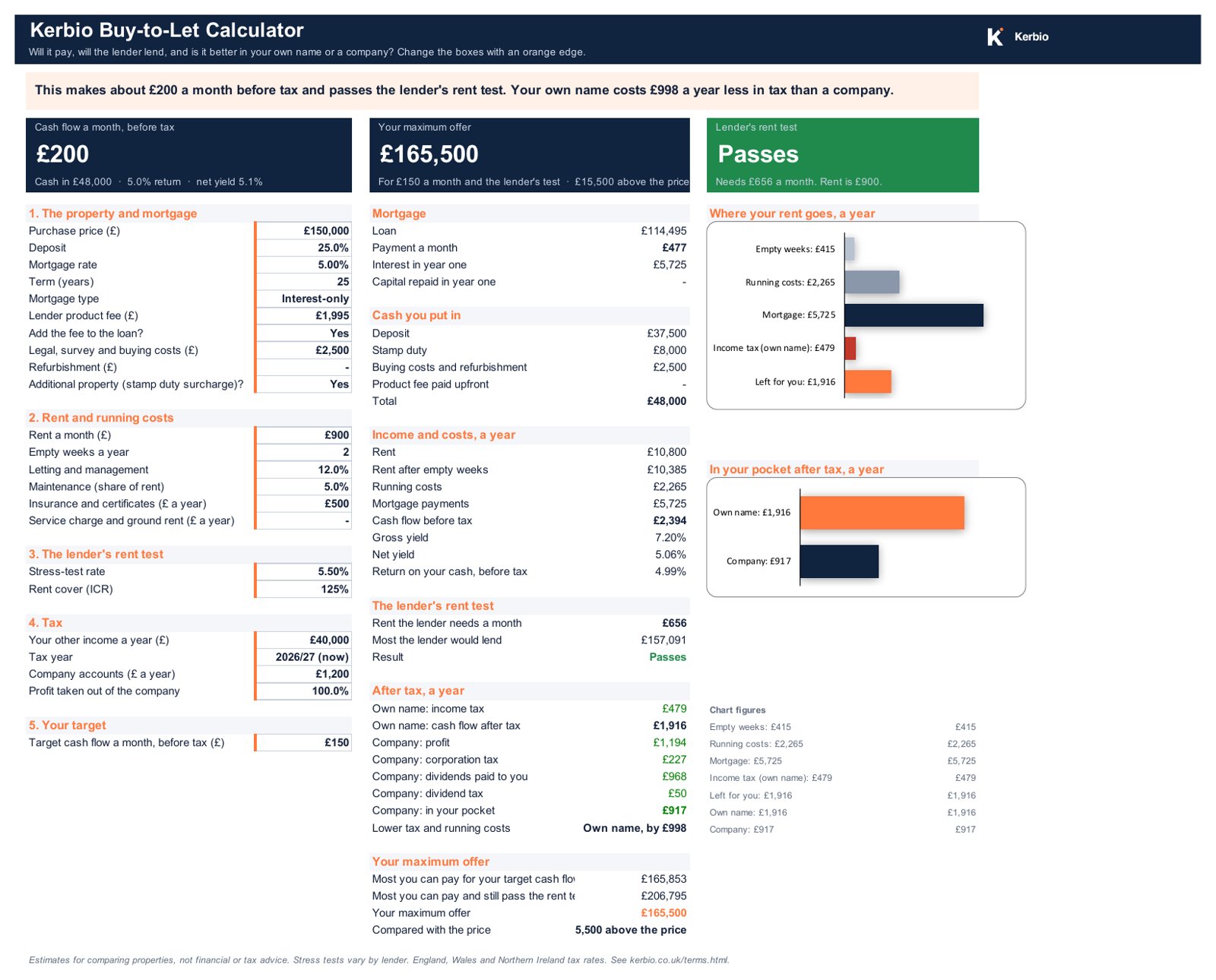
Other free calculators
About these calculators
Free, with no sign-up, made by Kerbio, a small independent UK tool for property investors. Nothing you type leaves your browser. Figures are indicative and this is general information, not financial or tax advice.
We also make a Chrome extension that shows sold prices, LHA, licensing and Article 4 on every Rightmove, Zoopla and OnTheMarket listing.
See the extension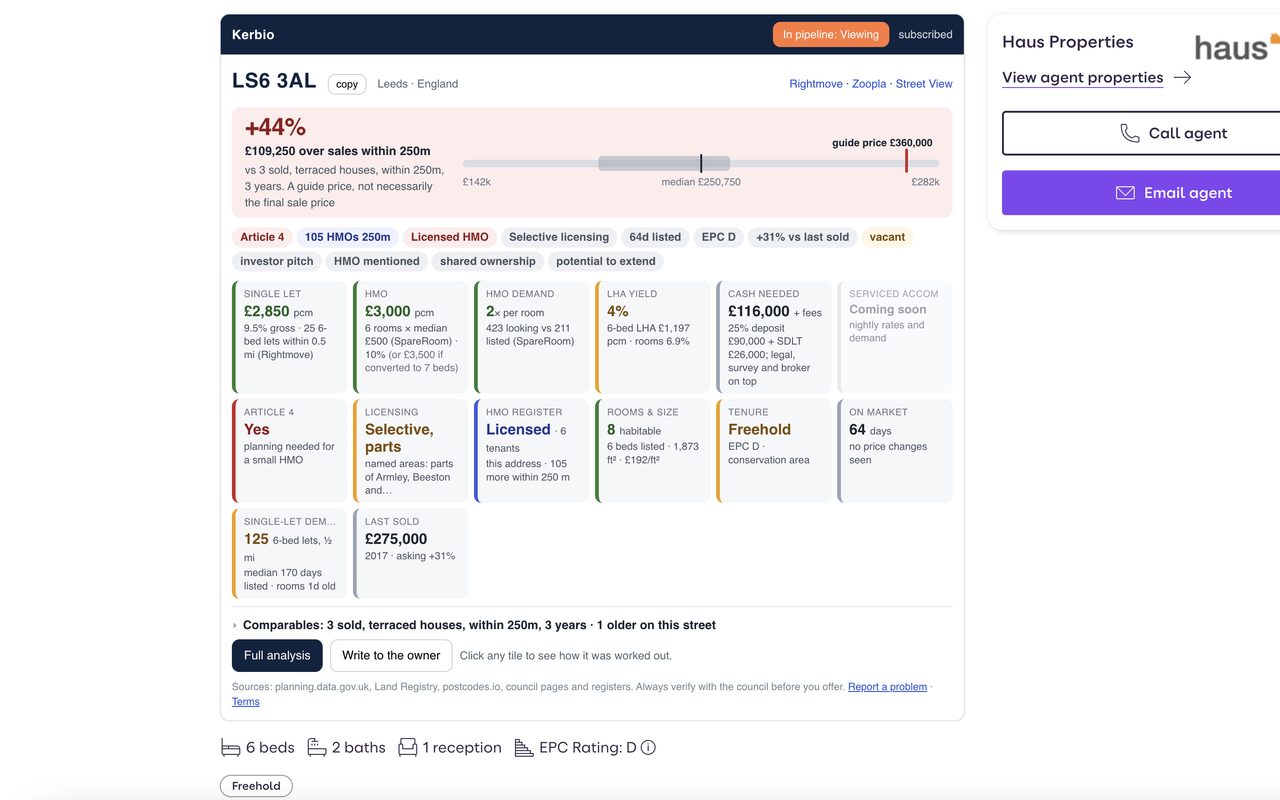
Rates: GOV.UK income tax rates (personal allowance £12,570, reduced above £100,000); changes to tax rates for property, savings and dividend income (dividends 10.75%, 35.75%, 39.35% from April 2026; property income 22%, 42%, 47% and 22% finance cost relief from April 2027); corporation tax 19% to £50,000, 25% from £250,000 with marginal relief between, assuming no associated companies. England, Wales and Northern Ireland. General information, not tax advice.