 Kerbio
How the three ways of paying interest compare
The default. The lender deducts the whole term's interest on day one, so nothing is paid monthly but you receive less. Repay early and the unused months are usually refunded.
Interest is added to the balance each month and paid at the end, usually compounding. Common on refurb bridges, where money is released in stages.
You pay the interest monthly, like a mortgage, so you receive more upfront. The lender will check you can afford the payments.
Buying at auction? Traditional auctions give you about 28 days to complete; see property auctions by area and how they work.
Want to see how much cash you need to buy, not just what the loan costs? The bridging guide's calculator compares the five ways to structure a bridge on the same deal, including lending on the asking price or the value after works.
Work out your maximum offer
The Kerbio Deal Analyser is an Excel spreadsheet that finds the most you can pay to hit your target profit, with cash needed on day one under each bridge type and BRRR money left in.
See the Deal Analyser, £24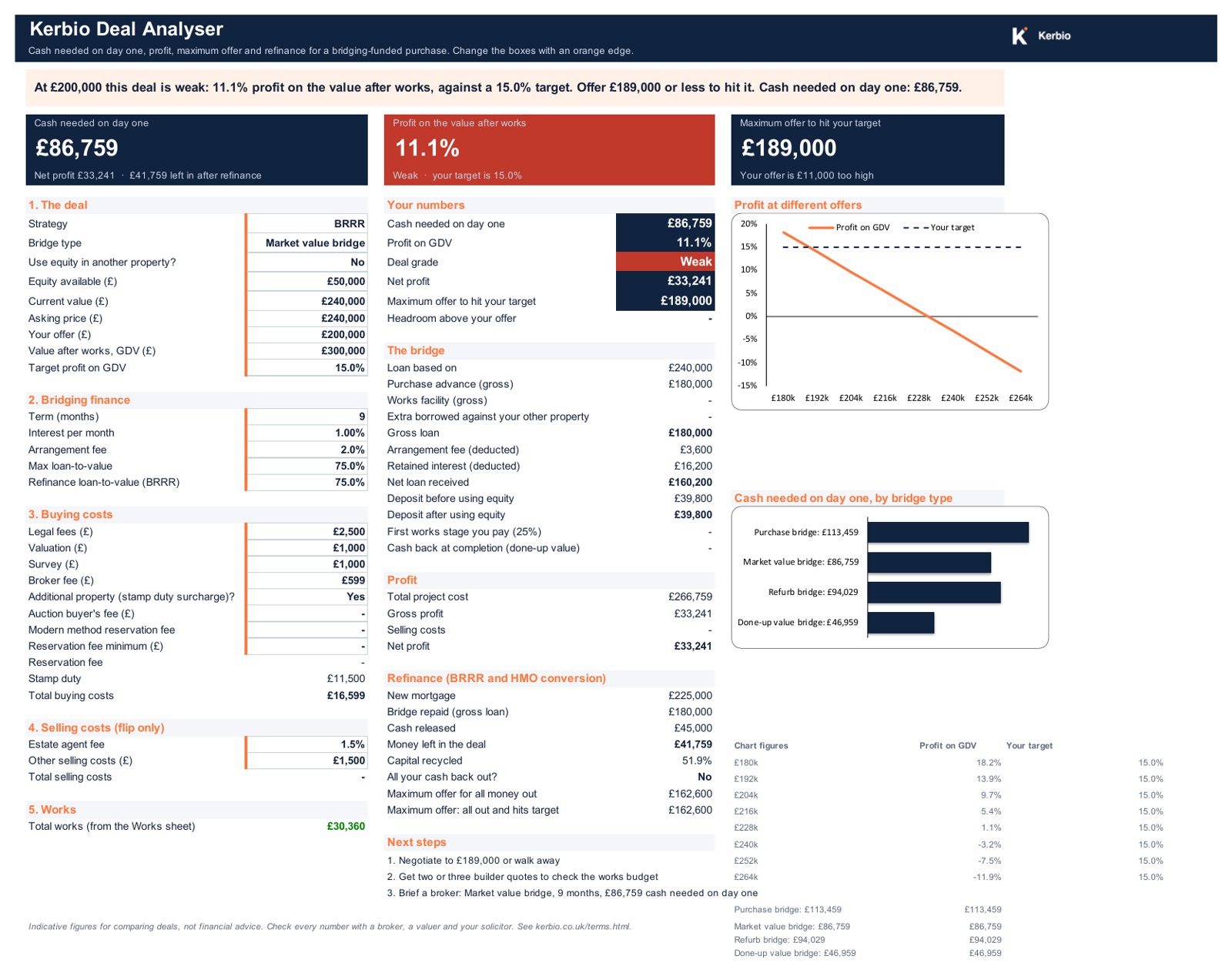
Questions
How is bridging loan interest calculated?
It is quoted as a monthly rate, typically 0.8% to 1.25% a month in 2026. With retained interest the lender deducts the whole term's interest from the loan on day one. With rolled-up interest it is added to the balance and paid at the end. With serviced interest you pay it monthly, like a mortgage.
What is retained interest?
The lender keeps back the interest for the full term when the loan is released, so you receive less than you borrow. On a £100,000 loan at 1% a month for 12 months with a 2% fee, about £86,000 reaches your solicitor. If you repay early, most lenders refund the unused months.
How much can I borrow on a bridging loan?
Usually up to 75% of the property's value, sometimes 70% or less for heavier refurbishment, commercial property or a second charge. Some structures lend on the asking price or the value after works; see the five types of bridge.
What fees are there on a bridging loan?
An arrangement fee (often 2% of the loan), a physical valuation, your legal fees and the lender's legal fees (bridging lenders use their own solicitor), sometimes a broker fee and occasionally an exit fee.
Is a bridging loan more expensive than a mortgage?
Yes, per month. It is a short-term tool for speed, auctions and properties a mortgage lender won't take yet. The cost is worth weighing against the discount or value uplift it lets you capture.
Other free calculators
About these calculators
Free, with no sign-up, made by Kerbio, a small independent UK tool for property investors. Nothing you type leaves your browser. Figures are indicative and this is general information, not financial or tax advice.
We also make a Chrome extension that shows sold prices, LHA, licensing and Article 4 on every Rightmove, Zoopla and OnTheMarket listing.
See the extension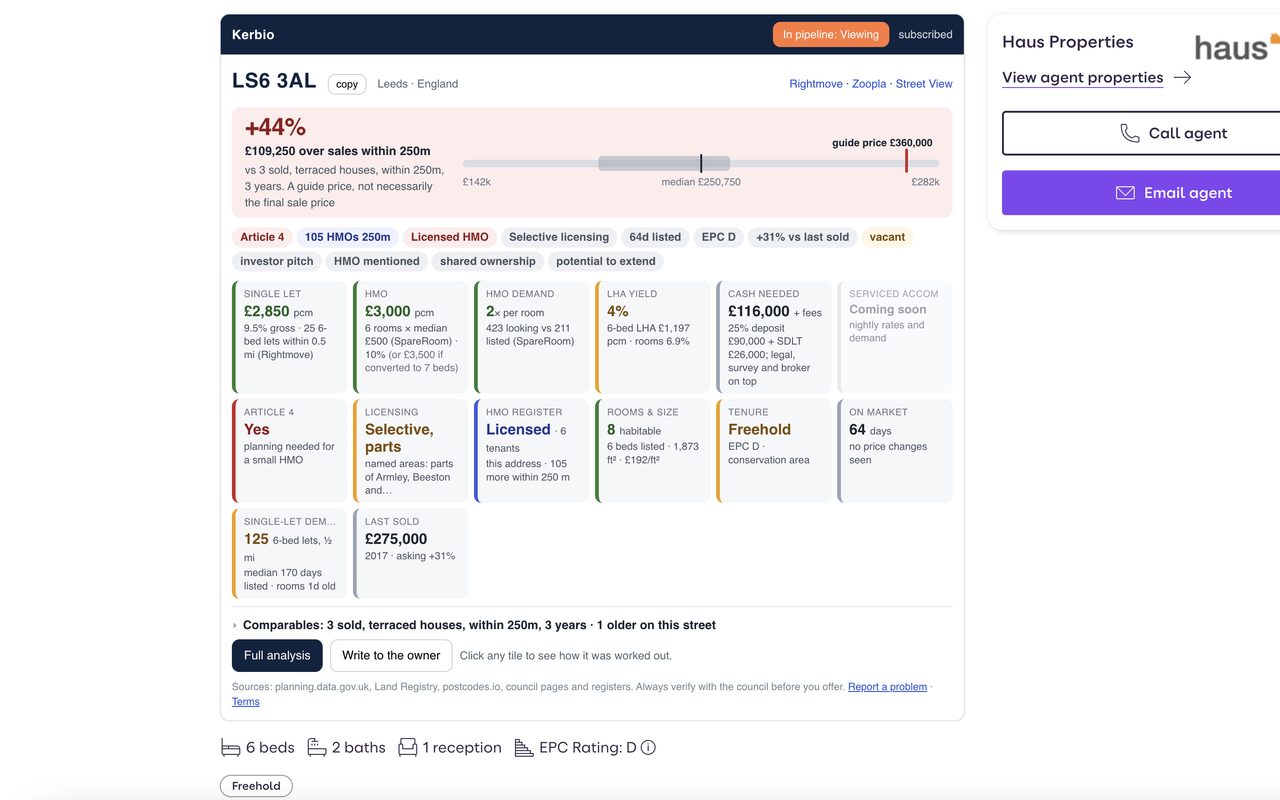
Representative figures. Every bridging lender's rate, fees and loan-to-value differ, so put in the terms from your own quote.
Typical 2026 figures from the Bridging Trends Q1 2026 survey. Rolled-up interest is shown compounding monthly; retained and serviced interest are simple. Indicative only; lenders' terms vary. Not financial advice.