 Kerbio
Where the law is, as of 13 November 2026
- 28 October 2026Budget announces the rates: 24%, 44% and 49% from 6 April 2027.Done
- 3 November 2026Finance Bill 2026-27 First Reading, House of Commons.Done
- 4 November 2026Bill 173 published. Clause 3(2) sets the property basic, higher and additional rates for 2027-28 at 24%, 44% and 49%; clause 3(4) repeals sections 5 and 7 of Finance Act 2026, which had set 22%, 42% and 47%. Clause 4 moves the property trust rate from 47% to 49%.Done
- Second ReadingMonday 23 November 2026, House of Commons (Parliament's Bills page, checked 13 November 2026). The principle debate; amendments come at Committee.Set
- Committee, Report, LordsNot yet scheduled.TBC
- Royal AssentNo date. Until then the enacted 2027/28 rates are 22%, 42% and 47%.TBC
Track it: Finance Bill 2026-27 on bills.parliament.uk · the Bill as introduced · explanatory notes (PDF).
If you own a let in your own name, your tax bill on it rises by roughly 4% of your profit after mortgage interest from April 2027. Half of that was already law; the 28 October 2026 Budget added the other half. Companies, capital gains tax and stamp duty rates are untouched. Scotland and Wales can set their own property rates.
Someone on a £30,000 salary with one flat clearing £10,000 before interest pays about £240 more a year. Three lets on top of a £40,000 salary: about £680. No mortgage at all: the full 4% of profit, £800 on £20,000.
What the Budget changed for landlords
From 6 April 2027, rental profit is taxed at 24%, 44% or 49% instead of 20%, 40% or 45%. Budget 2025 had legislated 22%, 42% and 47%; this Budget adds 2 more.
Finance Bill 2026-27You still cannot deduct mortgage interest. The tax reduction you get instead is set at the property basic rate, so it moves from 20% to 24% at the same time.
Treasury costing, 28 Oct 2026It is an income tax change: individuals, partnerships and trusts (accumulation and discretionary trusts pay the 49% trust rate). Rental profit inside a limited company pays corporation tax as before.
GOV.UK tax information noteWales proposed on 17 November 2026 to set its new property rates at 10p, so Welsh taxpayers pay the same 24%, 44% and 49% from April 2027 (Draft Budget, subject to the Senedd). Scotland has the power to set its own property rates and has announced nothing yet.
Welsh Draft Budget 2027-28; GOV.UK tax information noteWhat did not change
18% and 24% on residential property, £3,000 annual exempt amount, in both 2026/27 and 2027/28. No rate change in the Budget.
UnchangedPersonal allowance £12,570, basic rate band to £37,700, additional rate from £125,140, taper above £100,000: the same in 2027/28. As rents rise, more profit lands in the higher bands.
FrozenCorporation tax stays at 19% to £50,000 and 25% from £250,000. Dividend rates stay at 10.75%, 35.75% and 39.35% with a £500 allowance.
UnchangedConfirmed on Budget day: LHA rates and the benefit cap stay at their current levels for 2027/28. The rent the state covers does not rise with the tax.
Frozen againAlso in the Budget, and now in the Bill: stamp duty on the rent under an assured tenancy is removed for transactions from 1 May 2026 (clause 47); a council tax surcharge on homes worth £2m or more in England, £2,500 to £7,500 a year by band, from financial years beginning 1 April 2028 (clauses 97 to 115); a council tax surcharge on homes worth £2m or more in England arrives from April 2028; the Business Asset Disposal Relief lifetime limit halves to £500,000 from April 2027 (it rarely applies to a buy-to-let). No residential stamp duty rate change is in the Budget's list of tax measures.
Who it hits, and by how much
Extra income tax a year in 2027/28 against 2026/27, from our four worked examples (full arithmetic below). England, Wales and Northern Ireland rates.
- The tax on profit goes up 4 points, and the interest credit goes up 4 points too.
- So the net rise is 4% of profit after interest, whatever your band.
- Example: £10,000 profit, £4,000 interest: 4% of £6,000 = £240 a year.
- No mortgage: the full 4% of profit (£800 on £20,000).
- Interest bigger than profit, or total income near the personal allowance: the credit is capped, so the rise is bigger than 4% of the margin.
- Scotland: Scottish rates on rental income, and a Scottish decision on 2027/28 to come.
- Trusts: accumulation and discretionary trusts pay the 49% trust rate on property income.
Your numbers: 2026/27 against 2027/28
Free, runs in your browser, nothing is sent anywhere. England, Wales and Northern Ireland rates by default. Every assumption is editable under "Assumptions". An estimate, not tax advice: check with an accountant or HMRC.
Your rental income
Assumptions (all editable)
Defaults: Budget 2026 and the Budget's own rates table. The 2027/28 credit rate is set to follow the property basic rate, as the Treasury costing says; change it if Finance Bill 2026-27 says otherwise. Expenses exclude mortgage interest. Losses carried forward, the £1,000 property allowance, Rent a Room, savings and dividends are not modelled.
Allowable expenses: letting fees, insurance, repairs, certificates, service charges and ground rent. Not mortgage interest, which goes in its own box.
Tax on your rental income
Rough limited company comparison
Rough: interest deducted in full, corporation tax, then dividends at 2026/27 rates with the £500 allowance. It ignores the cost of moving a property you already own into a company (usually stamp duty and capital gains tax), dearer company mortgages, and money left in the company. A conversation for an accountant.
An estimate, not tax advice. Check with an accountant or HMRC. England, Wales and Northern Ireland rates; Scotland differs.
For a purchase after these rates, the Kerbio Buy-to-Let Calculator spreadsheet compares your own name with a company after these rates, and the Deal Analyser covers bridging and refurb deals.
The worked examples, line by line
Four made-up landlords, real arithmetic from the same code as the calculator. Rent less running costs gives the taxable profit; it is taxed at your rate; then the interest credit comes off. Rounded to the pound.
| Basic-rate taxpayer, one flat | 2026/27 | 2027/28 after the Budget |
|---|---|---|
| Rent less running costs (taxable profit) | £10,000 | £10,000 |
| Tax on that profit at your rate | £2,000 | £2,400 |
| Less the mortgage interest credit | −£800 (20%) | −£960 (24%) |
| Tax on the rental income | £1,200 | £1,440 |
| Left after interest and tax | £4,800 | £4,560 |
Salary £30,000. Rent £12,000 a year, £2,000 of running costs, £4,000 of mortgage interest. Extra tax: £240 a year (£20 a month). Against the 22% rates already in law, the Budget adds £120.
| Higher-rate taxpayer, one house | 2026/27 | 2027/28 after the Budget |
|---|---|---|
| Rent less running costs (taxable profit) | £15,000 | £15,000 |
| Tax on that profit at your rate | £6,000 | £6,600 |
| Less the mortgage interest credit | −£1,400 (20%) | −£1,680 (24%) |
| Tax on the rental income | £4,600 | £4,920 |
| Left after interest and tax | £3,400 | £3,080 |
Salary £55,000. Rent £18,000 a year, £3,000 of running costs, £7,000 of mortgage interest. Extra tax: £320 a year (£27 a month). Against the 22% rates already in law, the Budget adds £160.
| Three lets, pushed into higher rate | 2026/27 | 2027/28 after the Budget |
|---|---|---|
| Rent less running costs (taxable profit) | £35,000 | £35,000 |
| Tax on that profit at your rate | £11,946 | £13,346 |
| Less the mortgage interest credit | −£3,600 (20%) | −£4,320 (24%) |
| Tax on the rental income | £8,346 | £9,026 |
| Left after interest and tax | £8,654 | £7,974 |
Salary £40,000. Rent £42,000 a year across three lets, £7,000 of running costs, £18,000 of mortgage interest. Extra tax: £680 a year (£57 a month). Against the 22% rates already in law, the Budget adds £340.
| Retired, no mortgage | 2026/27 | 2027/28 after the Budget |
|---|---|---|
| Rent less running costs (taxable profit) | £20,000 | £20,000 |
| Tax on that profit at your rate | £4,000 | £4,800 |
| Less the mortgage interest credit | −£0 (20%) | −£0 (24%) |
| Tax on the rental income | £4,000 | £4,800 |
| Left after interest and tax | £16,000 | £15,200 |
Pension £15,000. Rent £24,000 a year, £4,000 of running costs, no mortgage. Extra tax: £800 a year (£67 a month). Against the 22% rates already in law, the Budget adds £400.
Dates that matter
- 28 October 2026Budget announces the extra 2 points, with Treasury costings certified by the OBR.
- 3 and 4 November 2026Finance Bill 2026-27 introduced and published as Bill 173; the rates are in clause 3(2).
- Monday 23 November 2026Second Reading in the House of Commons: the Commons debates the Bill that carries the 24%, 44% and 49% property income tax rates for 2027-28 (clause 3). Amendments come at Committee.
- Coming monthsCommittee, Report and the Lords, not yet scheduled. The rates are not law until Royal Assent.
- 6 April 2027Property rates of 24%, 44% and 49% and the 24% interest credit start, for tax year 2027/28.
- 31 January 2029Self assessment balancing payment for 2027/28 is due: the first bill at the new rates.
What landlords are weighing up
Things people are looking at, not advice. Each has costs and catches that depend on your situation; an accountant can run your figures.
Rental profit sits on top of your other income. The calculator shows which band your last pound of rent falls in.
Repairs, insurance, fees, certificates and mileage all reduce profit. Four points more tax makes each receipt worth more.
Corporation tax did not rise. But moving a property you already own into a company usually means stamp duty and capital gains tax, and dearer mortgages.
Where a property is owned with a spouse or partner, how the income is split between you decides which bands it falls into.
The OBR says the two rises risk a steady rise in rents over time, with fewer new landlords entering and costs passed on. LHA is frozen, so benefit tenants cannot follow.
Wales: the same rates, proposed on 17 November 2026
Questions
Is the 24% / 44% / 49% rate law yet?
Not yet. The rates are in clause 3(2) of Finance Bill 2026-27 (Bill 173), introduced on 3 November 2026 and published on 4 November 2026; Second Reading is set for Monday 23 November 2026 in the House of Commons, the debate on the principle of the Bill; amendments come at Committee and the later stages have no dates. The Finance Act 2026 already made 22%, 42% and 47% the law for 2027/28, and clause 3(4) of the Bill repeals those sections. Until Royal Assent, the enacted rates for 2027/28 are 22%, 42% and 47%.
Which clause of the Finance Bill sets the rates?
Clause 3(2): for the tax year 2027-28 the property basic rate is 24%, the property higher rate 44% and the property additional rate 49%. Clause 3(3) sets the same figures for savings income and clause 3(1) keeps the default rates at 20%, 40% and 45%. Clause 3(4) repeals sections 5 and 7 of Finance Act 2026. For trusts, clause 4 changes the property trust rate in section 9 of the Income Tax Act 2007 from 47% to 49% for 2027-28 and later years.
What does the Bill do to stamp duty on rent?
Clause 47 inserts a new paragraph 1B into Schedule 5 of the Finance Act 2003: no stamp duty land tax is chargeable on the acquisition of an assured tenancy for the purposes of the Housing Act 1988, and the grant, assignment or surrender of one is not notifiable where the chargeable consideration does not exceed the zero rate threshold. Clause 47(4) applies it to transactions with an effective date on or after 1 May 2026, and clauses 47(5) and (6) cover leases converted into assured tenancies by the Renters' Rights Act 2025. Before this, Schedule 5 charged 1% on the net present value of the rent over £125,000 (Table A, residential), a bill that fell on tenants of high-rent homes and that letting agents fielded questions about.
What is the council tax surcharge on £2 million homes?
Part 3 of the Bill (clauses 97 to 115) creates the High Value Council Tax Surcharge for dwellings in England valued at £2 million or more (clause 98). Clause 101 sets the annual amounts by band: £2,500 for £2 million to under £2.5 million, £3,500 for £2.5 million to under £3.5 million, £5,000 for £3.5 million to under £5 million and £7,500 for £5 million and over. Clause 115: it has effect for financial years beginning on or after 1 April 2028. Clause 112 treats a dwelling partly in Wales or Scotland as in England where an English billing authority covers it. Who pays and the exemptions are in clauses 99 and 100; this page does not paraphrase them.
Does it apply in Scotland and Wales?
Wales: yes, on the Welsh Government's proposal. Its Draft Budget 2027-28, published 17 November 2026, proposes to set all six Welsh Rates of Income Tax at 10p, including the three new Welsh property rates that start in April 2027. With the UK rates of 14p, 34p and 39p that makes 24%, 44% and 49% on rental profit for Welsh taxpayers from 6 April 2027, the same as England and Northern Ireland. It is a proposal until the Senedd approves the Final Budget. Scotland: still open. The Scottish Government has the power to set its own property income rates and Scottish taxpayers already pay Scottish rates on rental profit; we have seen no Scottish announcement as of 17 November 2026, so Scottish landlords should check what Holyrood decides. The savings rates apply UK-wide.
Does it apply to limited companies?
No. The rise is on income tax, so it applies to individuals, partnerships and trusts. A company pays corporation tax on rental profit (19% up to £50,000, 25% from £250,000, with marginal relief between) and you pay dividend tax when you take the money out. The Treasury expects some landlords to incorporate in response and says that response is likely to be limited. The calculator above gives a rough company comparison; the costs and risks of moving existing properties into a company are not in it.
Does the mortgage interest credit change?
Yes, in your favour, slightly. Since 2020 you have not been able to deduct mortgage interest; instead you get a tax reduction worth the basic rate of the interest. From 2027/28 that reduction is worked out at the property basic rate, so it rises from 20% to 24% along with the tax. That is why, for most landlords, the extra tax works out at about 4p on each £1 of profit after interest, rather than 4p on each £1 of profit.
Did the Budget change capital gains tax or stamp duty for landlords?
Not the rates. The Budget's own rate tables show capital gains tax on residential property at 18% and 24%, with a £3,000 annual exempt amount, for both 2026/27 and 2027/28, and no residential stamp duty rate change is in the Budget's list of tax measures. Two smaller items: stamp duty on the rent under an assured tenancy was removed from 1 May 2026, and the lifetime limit for Business Asset Disposal Relief falls to £500,000 from April 2027, which rarely applies to a buy-to-let.
Did Local Housing Allowance change?
No. On Budget day the Work and Pensions Secretary confirmed that Local Housing Allowance rates and the benefit cap will stay at their current levels for 2027/28. If you let to tenants on benefits, the rent the state covers is not going up with the tax.
When will I first pay the new rates?
The rates apply to the 2027/28 tax year, which starts on 6 April 2027. Under self assessment the balancing payment for that year is due by 31 January 2029, so that is when the higher rates first show up in a bill. Payments on account for 2027/28, due in January and July 2028, are based on your 2026/27 tax.
Why does the Treasury expect only £35m in the first year?
Timing. Tax for 2027/28 is mostly paid through self assessment in January 2029, so the Budget's own table shows £35m in 2027-28 and £575m in 2028-29, settling at about £455m a year by 2031-32. The OBR rates the costing's uncertainty as high.
About this guide
Written by Kerbio, a small independent UK tool for property investors, on 30 October 2026 from the Budget documents, the GOV.UK tax information note, the Treasury's policy costings and the OBR's October 2026 outlook. Nobody paid for it and nothing here is sponsored. Every figure is listed with its source below, and the examples are produced by the same code as the calculator.
Kerbio is a Chrome extension that puts sold prices, Article 4, licensing, the council's HMO register and LHA rates on the property listing you are reading.
See the extension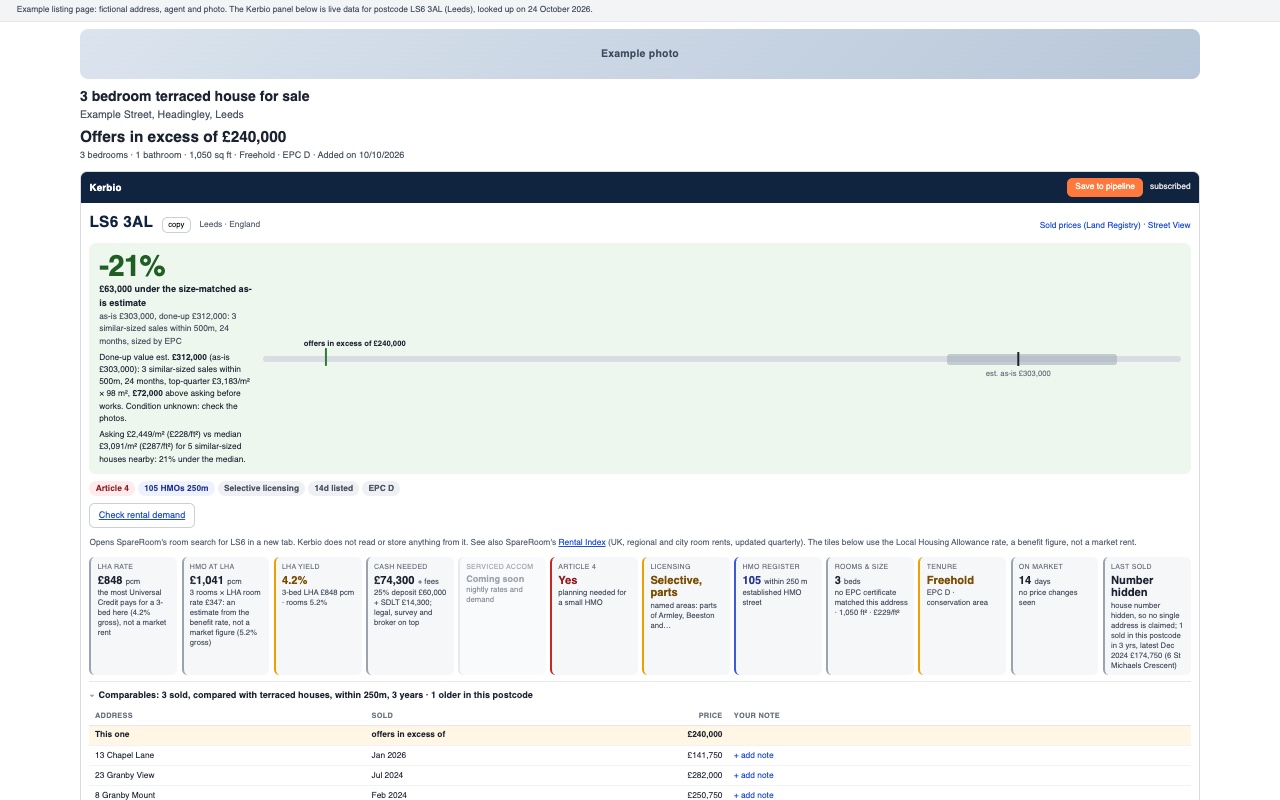
Sources
- Welsh Government, Draft Budget 2027-28 Report, 17 November 2026, Welsh taxes chapter (pages 42 to 44)
- Welsh Government, Draft Budget 2027-2028 (published 17 November 2026)
- Budget 2026 (HM Treasury, 28 October 2026), paragraphs 6.237, 6.246, 6.247, 6.261
- Income Tax: changes to tax rates for property and savings income (GOV.UK tax information note, 29 October 2026)
- Budget 2026 Overview of Tax Legislation and Rates, Annex A: rates and allowances (GOV.UK)
- Budget 2026 Overview of Tax Legislation and Rates, measures 1.2, 1.22, 1.33, 1.61 (GOV.UK)
- Budget 2026 policy costings, 'Property Income: Increase tax rates on property income by 2ppts' (HM Treasury, page 74)
- OBR Economic and fiscal outlook, October 2026, paragraphs 3.17, 3.46 and Table 3.3
- Changes to tax rates for property, savings and dividend income (GOV.UK policy paper, 26 November 2025)
- Change to tax rates for property, savings and dividend income: technical note (HMRC, November 2025)
- Finance Act 2026, sections 5 and 7 (legislation.gov.uk)
- Tax relief for residential landlords: how it's worked out (GOV.UK guidance)
- Statutory review of state pension and benefit rates 2027/28, written statement HCWS427 (Secretary of State for Work and Pensions, 28 October 2026)
- Self Assessment tax returns: deadlines (GOV.UK)
Figures checked on 30 October 2026; the Finance Bill position on 13 November 2026; the Wales position on 17 November 2026. The same list, with the exact quotations we relied on, is in SOURCES.txt. General information, not tax or financial advice: check your own position with an accountant or HMRC. Rates for Scotland differ.